National Park Service-led Hike Connects Moccasin Bend Stakeholders to Historic Civil War Fortifications
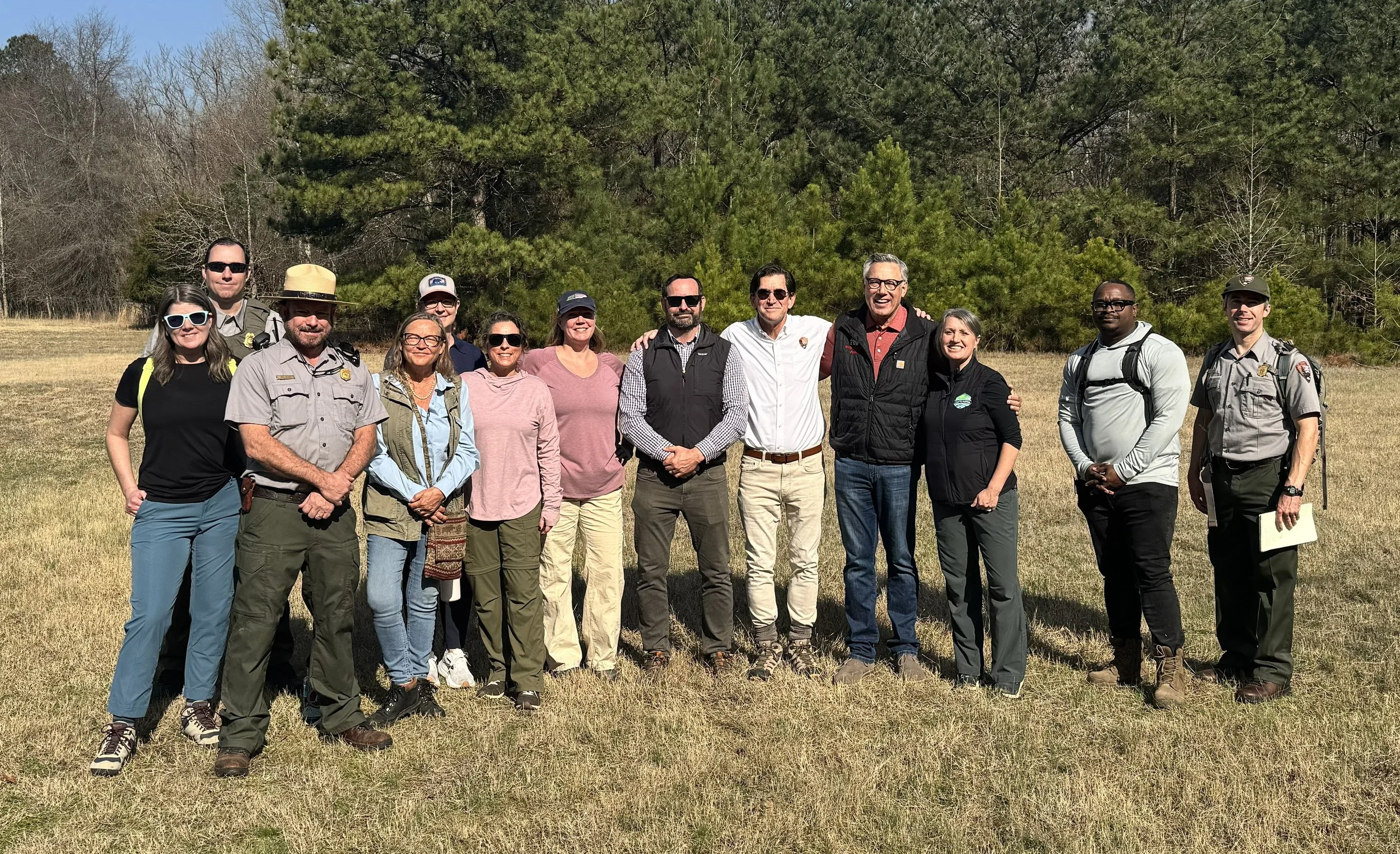
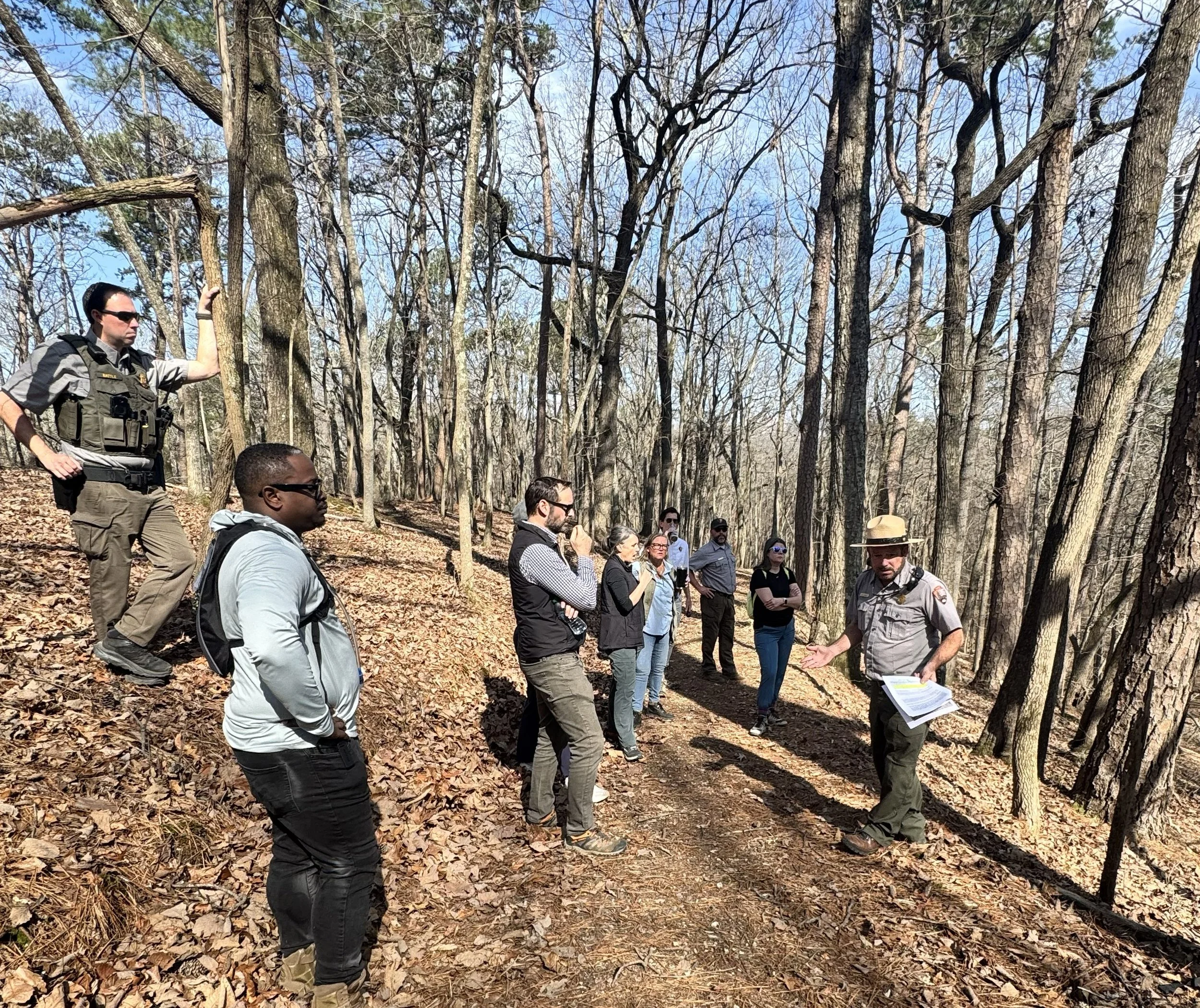
Tennessee State Representative Greg Vital gathered local partners for an educational visit to an important historic site within the Moccasin Bend National Archeological District. Beginning near the Moccasin Bend Mental Health Institute entrance on Moccasin Bend Road, the ranger-led hike to the Civil War fortifications on the southern terminus of Stringer’s Ridge sparked conversation around improving access to the area for the growing numbers of residents and visitors eager to explore some of the area’s nationally significant history.
Before departing on the two-hour hike and interpretive tour, Rep. Vital welcomed attendees from the City of Chattanooga, Hamilton County, National Park Partners, and Chickamauga and Chattanooga National Military Park. Vital noted the decades of conservation legacy and partnerships that have established the National Archeological District and have protected other of the region’s historic sites as well. Park Ranger Will Wilson gave an overview of Moccasin Bend’s role in shaping 12,000 years of Chattanooga’s history, after which the group set out for the mile and a half, moderately-difficult hike to the artillery earthwork complex on the southern end of Stringer's Ridge. In the fall of 1863, the earthen and log fortifications were the positions of Union cannon that played an important role in keeping the Confederates at bay in the Siege of Chattanooga and which helped Union forces win the “Battle Above the Clouds, the Battle of Lookout Mountain.
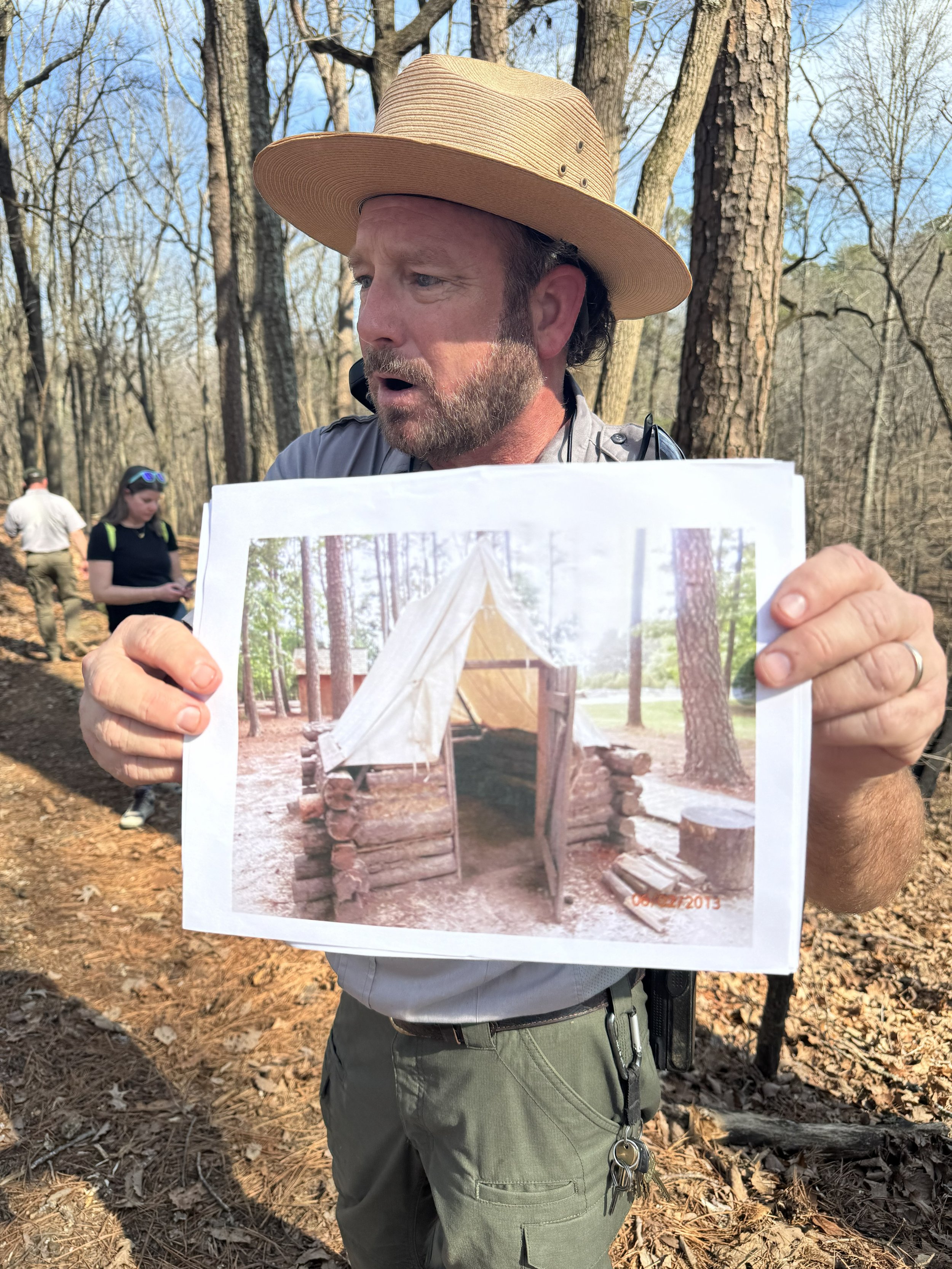
Following the September 18-20, 1863, Battle of Chickamauga, Union Army commander General William Rosecrans sent troops to Moccasin Bend to guard side and back doors into Chattanooga and to counter Confederate occupation of Lookout Mountain. Those troops, as many as 2,000, included the 10th Indiana Battery and the 18th Ohio Light Artillery. Digging in on the top of the southern-most hills of Stringer’s Ridge, the 10-pound Parrott rifles and 3-inch ordnance rifles of those two batteries commanded with their fire all the northern slopes of Lookout Mountain less than a mile away across the Tennessee River to the south. Robert Cravens’ “Alta Vista” home on Lookout Mountain, clearly in view, became a frequent target. Colonel John Bratton of the 6th South Carolina said in early November, “the enemy gave it a shelling the other day while we were passing this point to support General Law…There are two or three holes through the room where I am sitting. The Moccasin Battery which you have seen in the papers, does this work.” Several of the guns could have also fired east across the river had the Confederates ever have attempted to attack the Union line south of Chattanooga during the siege. Because of the Indiana and Ohio artillerymen’s command of the northern slopes of the mountain, the Confederates were unable to supply any sizeable force in Lookout Valley west of the mountain. This was a significant factor in allowing Union troops in late October, 1863, to easily seize Brown’s Ferry and the northern end of Lookout Valley and open a more direct supply, the “Cracker Line,” into Chattanooga via the Tennessee River to Kelly’s Ferry and then across the river at Brown’s Ferry and across Moccasin Bend to Chattanooga. On November 24, 1863, the guns fired into the rear and flank of Confederates on Lookout Mountain while Union infantry assaulted across the western slopes of the mountain and around the northern tip. Abandoned soon after the Union victories in November, 1863, much of the complex of earthwork fortifications remain today.
National Park Partners has planned a series of guided hikes at the Moccasin Bend National Archeological District, from noon hour walks along the Brown’s Ferry/Old Federal Road Trace to longer explorations on the Blue Blazes Trail and the Stringer’s Ridge earthworks. Visit https://nppcha.org/events to join us as we explore 12,000 years of history on Moccasin Bend.